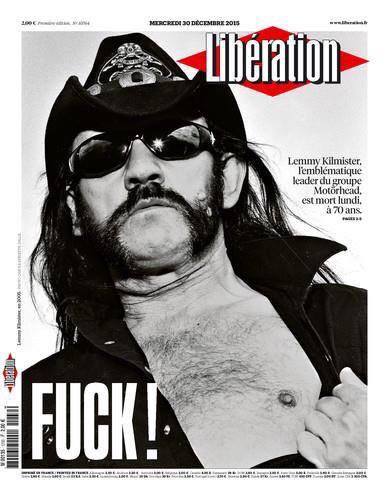

30 December 2015

29 December 2015
22 December 2015
MERRY XMAS
'All over the war-wrecked areas from Brussels to Stalingrad, other uncounted millions are living in the cellars of bombed houses, in hide-outs in the forests, or in squalid huts behind barbed wire. It is not so pleasant to read almost simultaneously that a large proportion of our Christmas turkeys will come from Hungary, and that the Hungarian writers and journalists – presumably not the worst-paid section of the community – are in such desperate straits that they would be glad to receive presents of saccharine and cast-off clothing from English sympathisers. In such circumstances we could hardly have a "proper" Christmas, even if the materials for it existed.
'But we will have one sooner or later, in 1947, or 1948, or maybe even in 1949. And when we do, may there be no gloomy voices of vegetarians or teetotallers to lecture us about the things that we are doing to the linings of our stomachs. One celebrates a feast for its own sake, and not for any supposed benefit to the lining of one’s stomach. Meanwhile Christmas is here, or nearly. Santa Claus is rounding up his reindeer, the postman staggers from door to door beneath his bulging sack of Christmas cards, the black markets are humming, and Britain has imported over 7,000 crates of mistletoe from France. So I wish everyone an old-fashioned Christmas in 1947, and meanwhile, half a turkey, three tangerines, and a bottle of whisky at not more than double the legal price.'
George Orwell, Tribune, 20 December 1946
'But we will have one sooner or later, in 1947, or 1948, or maybe even in 1949. And when we do, may there be no gloomy voices of vegetarians or teetotallers to lecture us about the things that we are doing to the linings of our stomachs. One celebrates a feast for its own sake, and not for any supposed benefit to the lining of one’s stomach. Meanwhile Christmas is here, or nearly. Santa Claus is rounding up his reindeer, the postman staggers from door to door beneath his bulging sack of Christmas cards, the black markets are humming, and Britain has imported over 7,000 crates of mistletoe from France. So I wish everyone an old-fashioned Christmas in 1947, and meanwhile, half a turkey, three tangerines, and a bottle of whisky at not more than double the legal price.'
George Orwell, Tribune, 20 December 1946
2 December 2015
SYRIA ONCE MORE
It's difficult to know where to begin on this, but here goes:
- The proposal to expand UK airstrikes against Isis from Iraq to Syria is not massively important in military terms. The RAF is already running anti-Isis strikes on targets in Iraq and it's clear that targets in Syria have already actually been hit. The Cameron government's proposed deployments are minimal.
- It's important symbolically, however, both internationally and domestically.
- Internationally, it shows that Britain is lined up with France and the US in solidarity and is, um, trying to work out what to do about Russia, Iran and the Kurds -- and, er, Turkey and the Sunni states of the Arabian peninsula, which are the key local players (apart of course from Iraq and Syria). This is rather less than convincing. It might be that the UK getting on board with France and the US makes it easier for the west to cut a shabby deal with Assad and Putin; but it might not.
- Domestically, it has given David Cameron a chance to batter Jeremy Corbyn as Labour leader. Corbyn has been principled in a pacifist/anti-imperialist way but lacklustre on the issue, allowed it to be turned into a test of his leadership and then performed poorly in the House of Commons debate.After moaning about Cameron's reported remarks on terrorist sympathisers in Labour's ranks, the PLP in the Commons responded seriously on the intervention motion. It was the first time in several years that the house was must-watch TV -- I think since the 2003 Iraq war debate when Robin Cook announced his resignation. The quality of debate was good, and the proceedings were civilised. Hilary Benn made an effective if hardly profound speech disowning the Corbyn perspective, and nearly 70 Labour MPs voted for the government motion. That's nearly one-third of the PLP. We live in interesting times.
26 November 2015
THE MCDONNELL MAO JOKE
- If there was any point to throwing Mao’s Little Red Book at George Osborne, it was to have a go at him for cosying up to the Chinese government, which McDonnell believes is dumping steel on the world market and putting British steelworkers out of work.
- It might have made sense if McDonnell had used an incendiary Mao quote about how the proletarian revolution will use all its cunning to trick the running dogs of imperialism into serving the cause of Marxism-Leninism, and then said that nothing much has changed in the last 40 years since the high days of Maoism in China (ie, that Osborne is the dupe of the Chinese communists).
- Instead, he used a banal platitudinous Mao quote to the effect that leaders should listen to the people, which he obviously endorsed – as would any democrat or indeed any mad dictator. This implies that there is no problem with cosying up to the Chinese government -- unless they are capitalist roaders who have traduced Mao’s legacy and sold out the revolution.
- Yet if they are capitalist roaders who have sold out the revolution, there’s the double difficulty that Mao was responsible for the deaths of millions, a dictator who didn’t listen to the people – and yet remains an icon for the Chinese Communist Party, even though he is now officially considered only 70 per cent right and 30 per cent wrong (and is frankly a bit of an embarrassment to the current party leadership).
- So in half-a-minute of banter, McDonnell appeared at once anti-Chinese and pro-Chinese, offended everyone with an opinion for or against engagement with the current Chinese government, and made himself look like a particularly stupid 1968 student revolutionary. That takes class we have not seen in British politics for a long time.
20 November 2015
ONCE AGAIN, CORBYN
Jeremy Corbyn’s election as Labour leader marks the most radical break in Labour politics since 1931. His overwhelming victory means that the hard left, marginal since the defeat of Bennism in the mid-1980s (except to a certain extent in the Ken Livingstone mayoral operation, in the campaign against the war in Iraq and in some unions), is now the central command of the Labour Party – at least in name.
He cemented his success by making John McDonnell shadow chancellor (once of Labour Herald and close to the Workers’ Revolutionary Party, a key figure in Ken Livingstone’s GLC, like Corbyn a linchpin of the Campaign Group in the Blair and Brown years, and chair of the Labour Representation Committee, which from 2004 organised the hard left in Labour’s constituencies and the unions). He appointed as communications supremo Seumas Milne, the keeper of the hard left flame at the Guardian with unparalleled contacts in various hard left networks. (Milne is a veteran of the Tankie Straight Left faction that operated for years partly inside Labour and partly inside the CPGB, and he’s great friends with, among others, George Galloway and Andrew Murray, another Straight Leftist, later of the CPB and Stop the War, now Len McCluskey’s head honcho at Unite). Simon Fletcher (formerly Ken Livingstone’s chief aide and a member of Socialist Action for years) and Jon Lansman (a key organiser of the Bennite surge in the early 1980s and a key figure in the LRC) were already on his team. Andrew Fisher, Corbyn’s policy director of choice, was previously a leading light in the LRC. And Livingstone himself has now been given the job of co-chairing the review of defence policy with Maria Eagle…
It’s the most improbable comeback in British politics – for a political faction rather than for an individual – in living memory. The gang that lost and appeared to have been defeated forever (and it is a gang) has come back with a vengeance. It’s different from the 1980s, when the hard left captured the Labour policy-making process via Labour's National Executive Committee, but never the leadership: this time it’s the leadership but not the policy-making apparatus that it controls.
But if this is an extraordinary turn of events, it is not inexplicable. The hard left never went away despite being sidelined by successive Labour leaders: its networks in constituency Labour parties and the unions remained in place throughout the New Labour years, and – particularly from 2003-04 – grew in influence: look at the results of the constituency section elections to Labour’s NEC and the consolidation of the hard left in the TGWU/Unite. (By contrast, the networks of the traditional Labour right atrophied, those of the ‘moderniser’ right never became more than clubs for wannabe career politicians, and those of the soft left all but disappeared.) Long before 2015 there was a widespread feeling among Labour members, by no means confined to the hard left, that the party lost in 2010 – and had been losing support since 2001 – because under Tony Blair it abandoned real Labour values. (The most important reason was the Iraq war, though there were others: spin, PFI, union law etc etc.)
Gordon Brown and Ed Miliband, on this view, were massive disappointments who failed to turn Labour back to the true path, although the true path was never particularly coherently described. Corbyn came across during the leadership election campaign as honest, principled, straight-talking and unspun – and untainted by the New Labour era. With money (particularly from Unite) and organisation (based on the LRC and the unions, with a little help from the Leninist sects via the People’s Assembly Against Austerity) on his side, he won the leadership on a wave of enthusiasm against three very weak rivals who made fools of themselves by abstaining on the government’s welfare bill and articulated no vision at all. Corbyn was a symbol of hope, his victory a sign that New Labour was dead.
So what’s not to like? The first and most obvious thing is that Corbyn’s core anti-austerity message takes no account of the fact that Labour didn’t fail in 2015 because its economic policy was perceived as insufficiently radical (except perhaps in Scotland, where the SNP owed at least some of its breakthrough to the appeal of its attack on Labour’s supposed ‘austerity lite’). All the post-election opinion polling shows that Labour was not trusted as economically competent by comparison with the Tories, particularly among affluent working-class, white-collar, self-employed and home-owning voters. It was also seen as soft on welfare cheats and immigrants. There’s a real danger that a poorly designed and poorly presented ‘tax, borrow and spend’ stance will make Labour’s electoral predicament worse. Although Corbyn’s campaign manifesto included some attractive policies (albeit rather vaguely sketched out and unimaginative), it didn’t answer the question the Tories and the right-wing press immediately started to ask: ‘How are you going to pay for it?’ At very least, there’s a lot of work to be done here. (There’s also the problem of getting the new direction through Labour’s policy-making structures, which were designed to prevent radical changes of political tack.)
Then there’s Europe/foreign/defence policy. It usually doesn’t matter for most voters at election time – and didn’t in 2015 – but it does sometimes. Labour lost in 1983 and 1987 at least in part because of its foreign policy stances and internal rows over them (EC withdrawal in 1983, unilateral nuclear disarmament in both 1983 and 1987); it also lost support over Blair's backing for Bush in the early noughties. Corbyn is facing a multiple-vehicle crash already. We can argue about where he’s right and where he’s wrong – I’m particularly worried by his anti-Americanism, his anti-Europeanism, his positions on Ukraine and Russia and on the Middle East; others might baulk at his opposition to renewal of Trident. Whatever, Labour MPs have already started to voice dissent from the Corbyn line, and the potential for massive rows (much bigger than those in the 1980s) is immense. I think Corbyn’s pacifism and crude Leninist anti-imperialism are liabilities, but even if they’re not he has a lot to learn on presentation. His response to the 13 November atrocities in Paris was utterly risible.
Which brings us to the biggest problem: whether Labour can hold together under Corbyn. He won landslide support in the leadership election but has very little in the PLP, and though he had less difficulty putting together a broad-based shadow cabinet than many predicted, the differences among shadow cabinet members are giant. Then there’s the backbench right’s visceral antipathy to Corbyn and the extraordinarily resentful mood of non-Corbynysta Labour MPs throughout the PLP, who suspect that, for all his talk of a kinder, gentler ‘new politics’ – not so far in evidence – the hard left machine is out for revenge and hegemony. This could soon get a lot worse. Unless the Tories fail to get through their planned reduction of the number of MPs, there will be selections for candidates in a very large number of seats in areas with sitting Labour MPs. If the hard left launches a drive to get a PLP more in its own image, using Momentum, the continuity Corbyn leadership campaign, it doesn’t need mandatory reselection for the howls of sitting MPs to become audible very soon. Control of the party machine is already being contested between left and right – and arguments have already started about interpretations of the rules on triggering a leadership ballot, the proper procedure for selections and what constitutes a legitimate reason for excluding someone from party membership.
This is not good for Labour or for the broader left. But what next? There are many plausible scenarios – from disastrous civil war that makes the 1980s look like a tea party to everyone finding a modus vivendi and Labour being reinvigorated by the influx of young enthusiasts. Some people want to walk away, but I think a soft left network in the party to keep hard left and hard right under control and talking rather than feuding might just make a difference. How to create one and what it should do are not obvious. But a big conference early next year with a wide variety of speakers might be a start. Get in touch via comments if you are interested.
He cemented his success by making John McDonnell shadow chancellor (once of Labour Herald and close to the Workers’ Revolutionary Party, a key figure in Ken Livingstone’s GLC, like Corbyn a linchpin of the Campaign Group in the Blair and Brown years, and chair of the Labour Representation Committee, which from 2004 organised the hard left in Labour’s constituencies and the unions). He appointed as communications supremo Seumas Milne, the keeper of the hard left flame at the Guardian with unparalleled contacts in various hard left networks. (Milne is a veteran of the Tankie Straight Left faction that operated for years partly inside Labour and partly inside the CPGB, and he’s great friends with, among others, George Galloway and Andrew Murray, another Straight Leftist, later of the CPB and Stop the War, now Len McCluskey’s head honcho at Unite). Simon Fletcher (formerly Ken Livingstone’s chief aide and a member of Socialist Action for years) and Jon Lansman (a key organiser of the Bennite surge in the early 1980s and a key figure in the LRC) were already on his team. Andrew Fisher, Corbyn’s policy director of choice, was previously a leading light in the LRC. And Livingstone himself has now been given the job of co-chairing the review of defence policy with Maria Eagle…
It’s the most improbable comeback in British politics – for a political faction rather than for an individual – in living memory. The gang that lost and appeared to have been defeated forever (and it is a gang) has come back with a vengeance. It’s different from the 1980s, when the hard left captured the Labour policy-making process via Labour's National Executive Committee, but never the leadership: this time it’s the leadership but not the policy-making apparatus that it controls.
But if this is an extraordinary turn of events, it is not inexplicable. The hard left never went away despite being sidelined by successive Labour leaders: its networks in constituency Labour parties and the unions remained in place throughout the New Labour years, and – particularly from 2003-04 – grew in influence: look at the results of the constituency section elections to Labour’s NEC and the consolidation of the hard left in the TGWU/Unite. (By contrast, the networks of the traditional Labour right atrophied, those of the ‘moderniser’ right never became more than clubs for wannabe career politicians, and those of the soft left all but disappeared.) Long before 2015 there was a widespread feeling among Labour members, by no means confined to the hard left, that the party lost in 2010 – and had been losing support since 2001 – because under Tony Blair it abandoned real Labour values. (The most important reason was the Iraq war, though there were others: spin, PFI, union law etc etc.)
Gordon Brown and Ed Miliband, on this view, were massive disappointments who failed to turn Labour back to the true path, although the true path was never particularly coherently described. Corbyn came across during the leadership election campaign as honest, principled, straight-talking and unspun – and untainted by the New Labour era. With money (particularly from Unite) and organisation (based on the LRC and the unions, with a little help from the Leninist sects via the People’s Assembly Against Austerity) on his side, he won the leadership on a wave of enthusiasm against three very weak rivals who made fools of themselves by abstaining on the government’s welfare bill and articulated no vision at all. Corbyn was a symbol of hope, his victory a sign that New Labour was dead.
So what’s not to like? The first and most obvious thing is that Corbyn’s core anti-austerity message takes no account of the fact that Labour didn’t fail in 2015 because its economic policy was perceived as insufficiently radical (except perhaps in Scotland, where the SNP owed at least some of its breakthrough to the appeal of its attack on Labour’s supposed ‘austerity lite’). All the post-election opinion polling shows that Labour was not trusted as economically competent by comparison with the Tories, particularly among affluent working-class, white-collar, self-employed and home-owning voters. It was also seen as soft on welfare cheats and immigrants. There’s a real danger that a poorly designed and poorly presented ‘tax, borrow and spend’ stance will make Labour’s electoral predicament worse. Although Corbyn’s campaign manifesto included some attractive policies (albeit rather vaguely sketched out and unimaginative), it didn’t answer the question the Tories and the right-wing press immediately started to ask: ‘How are you going to pay for it?’ At very least, there’s a lot of work to be done here. (There’s also the problem of getting the new direction through Labour’s policy-making structures, which were designed to prevent radical changes of political tack.)
Then there’s Europe/foreign/defence policy. It usually doesn’t matter for most voters at election time – and didn’t in 2015 – but it does sometimes. Labour lost in 1983 and 1987 at least in part because of its foreign policy stances and internal rows over them (EC withdrawal in 1983, unilateral nuclear disarmament in both 1983 and 1987); it also lost support over Blair's backing for Bush in the early noughties. Corbyn is facing a multiple-vehicle crash already. We can argue about where he’s right and where he’s wrong – I’m particularly worried by his anti-Americanism, his anti-Europeanism, his positions on Ukraine and Russia and on the Middle East; others might baulk at his opposition to renewal of Trident. Whatever, Labour MPs have already started to voice dissent from the Corbyn line, and the potential for massive rows (much bigger than those in the 1980s) is immense. I think Corbyn’s pacifism and crude Leninist anti-imperialism are liabilities, but even if they’re not he has a lot to learn on presentation. His response to the 13 November atrocities in Paris was utterly risible.
Which brings us to the biggest problem: whether Labour can hold together under Corbyn. He won landslide support in the leadership election but has very little in the PLP, and though he had less difficulty putting together a broad-based shadow cabinet than many predicted, the differences among shadow cabinet members are giant. Then there’s the backbench right’s visceral antipathy to Corbyn and the extraordinarily resentful mood of non-Corbynysta Labour MPs throughout the PLP, who suspect that, for all his talk of a kinder, gentler ‘new politics’ – not so far in evidence – the hard left machine is out for revenge and hegemony. This could soon get a lot worse. Unless the Tories fail to get through their planned reduction of the number of MPs, there will be selections for candidates in a very large number of seats in areas with sitting Labour MPs. If the hard left launches a drive to get a PLP more in its own image, using Momentum, the continuity Corbyn leadership campaign, it doesn’t need mandatory reselection for the howls of sitting MPs to become audible very soon. Control of the party machine is already being contested between left and right – and arguments have already started about interpretations of the rules on triggering a leadership ballot, the proper procedure for selections and what constitutes a legitimate reason for excluding someone from party membership.
This is not good for Labour or for the broader left. But what next? There are many plausible scenarios – from disastrous civil war that makes the 1980s look like a tea party to everyone finding a modus vivendi and Labour being reinvigorated by the influx of young enthusiasts. Some people want to walk away, but I think a soft left network in the party to keep hard left and hard right under control and talking rather than feuding might just make a difference. How to create one and what it should do are not obvious. But a big conference early next year with a wide variety of speakers might be a start. Get in touch via comments if you are interested.
13 August 2015
THOUGHTS ON CORBYN
1. A large part of the bien pensant liberal middle class did not believe what happened in front of their eyes at the general election. They thought Labour had done the right things to win and that Ed Miliband was a decent bloke who’d been much misunderstood. This response was particularly widespread among young Labour voters and others with a poor sense of how many British voters look at their house-price estimates on websites before putting the cross in the box on election day. Jeremy Corbyn is the champion of the disappointed who can’t believe the election result even now.
2. His appeal is not too difficult to understand. Corbyn is not a ranter or a speak-your-weight machine. He’s a decent constituency MP and personally austere. For people of broadly liberal-leftish views who don’t go out much, don’t mix with people unlike themselves and don’t read much about politics (let alone post-election psephology), he’s just a good bloke. He has caught a mood that Labour needs to say what it means rather than try to find out what people want it to say before it opens its mouth. And he’s been the beneficiary, bizarrely, of his low profile and marginal status in the parliamentary Labour Party. Tony Blair and others bemoan his lack of experience by comparison with Michael Foot and Tony Benn in the 1980s – strange in Blair’s case because he became leader in 1994 and won the 1997 general election having never been anywhere near government. But Corbyn is not part of “that lot” who OKed the Afghanistan and Iraq wars and tuition fees, presided over economic crisis and got fat on parliamentary expenses. Even though he’s a parliamentary veteran, he seems fresh, or at least untainted (in a way that Foot and Benn and even Neil Kinnock and John Smith did not after 1979).
3. This is in part simply because time flies. No one under the age of 50 has an adult memory of the 1970s and no one under 35 voted Labour in 1997. Labour’s massive bust-ups in the 1980s mean as little to committed politicos in their twenties, thirties and forties as Bevanism v Gaitskellism did to anyone under 50 30 years ago. Corbyn’s minor role in Bennism and his much bigger one in the diminished and ineffectual PLP Campaign Group hard left after Bennism collapsed are now ancient history.
4. But as time flies, the past is not just forgotten but mythologised. We all do it. I am past-it enough to remember trolleybuses and steam trains, signing on during university vacations and living in squats that were legally sanctioned. Ah, the good old days… But forget my reveries. Corbyn appeals to a wistful false memory of a mythical world. A generous cradle-to-grave welfare state and industrial economy that could both have survived globalisation if only we’d done something different 30 years ago. Tony Benn as the principled leftwinger only interested in the “ishoos”, who never realised his actions would knife Michael Foot in the back and destroy Labour’s chances for a decade or more. The heroic stand of Lambeth council against the 1980s cuts, when it was run by crazed Trots who took cash from Saddam Hussein. The narrative needs to be countered – the 1980s hard left were for the most part complete bastards – but there's hardly anyone doing it.
5. OK, I’m uneasy with idiotic nostalgia, but it's not just because I'm worried about my memories being traduced. I rather like the new. I’m online man. I don’t need to go to the supermarket any more because it delivers. I get any book or computer device or railway model I want from Amazon. I’m posting this on my blog, where it will be read (not only in my dreams) by more people than saw anything I wrote 20 years ago for small-circulation weeklies and monthlies. I keep in touch day-to-day with people who’d long ago have faded into memory were it not for social media. I get Tribune and the New Statesman and the Guardian as print editions, but I’m not sure I’ll bother much longer. Yes, there are downsides: poor pay and conditions at online retail warehouses, cities that have only charity shops in their main streets, writers and musicians put into penury, students with giant lifetime debts, the ongoing housing crisis. And of course, there is a lot wrong with the current government's policies: its cuts to benefits, public services and infrastructure spending, its proposals to neuter trade unions and so on and so on. But Corbyn doesn't get any of the upsides of the new world even though he’s a beneficiary of social media enthusiasm. He still writes for the Morning Star, FFS.
6. Politicians’ records are open to scrutiny as never before – and yet they are able to get away with platitudinous nonsense and worse because the internet has created a populist noise that has made everyone a valued player and has thereby simultaneously devalued expertise and nuance. Corbyn’s record on foreign affairs is a case in point. The first thing to know about him is that he’s a boilerplate leftist with a Chomskyite thicko’s take on the world. American imperialism is the greatest evil in the world. Apartheid was the second-greatest evil – forget about Soviet totalitarianism – but now it’s Israel as US proxy in the Middle East. Nato expansion is the root of Russia’s current authoritarianism. It was a bit of a mistake to get rid of Gaddafi and at least Assad is secular and allows girls to go out in public. And, er, that’s it. It’s simplistic, but there’s enough truth in it to make it attractive to the great new internet democracy of Wikipedia opinion. The US interventions in Vietnam, Afghanistan and Iraq were bloody failures. Apartheid was evil. Israel’s treatment of the Palestinians is shocking and generally backed by Washington. And so on. The devil is of course in the detail and the “yes, buts”, but the detail and “yes, buts” get very few people engaged. If you say, for example, that the ongoing crisis in the Middle East is only partly down to Israel, that Russia and Iran and China are more important imperialist agressors in many parts of the world than the US or any EU country, that Cuba and Venezuela and China are hardly models to emulate, you lose your readers’ attention (and then get abusive online comments from morons, though that’s a minor everyday hazard). The idiot noise online favours Corbyn; I’d rather read the FT.
7. On domestic policy, Corbyn has surprisingly little to say. The anti-austerity line (his USP) is straight Keynes and the policy prescriptions – an end to social security cuts, lots of borrowing to finance public investment in housing and infrastructure, renationalisation of the railways and so on – though rather vaguely sketched-out, are far from crazy. Corbyn is not going for a 1983 manifesto shopping list (at least so far) and has refrained (again so far) from embracing old panaceas (withdrawal from Europe and devaluation) that stymied Tony Benn in the 1980s and a large part of the soft left well into the 1990s. There are bits of his programme that are very poorly developed. But the main difficulty he has is selling even moderately expansionist and redistributive social democratic proposals on borrowing and taxation to voters, which has been a Labour bugbear for years. The major problem in 1992 was not the radicalism of Labour’s shadow budget but the failure to put its programme over publicly as reasonable and unthreatening: the same was true after 2010. Ed Balls was told to turn off the Keynesian rhetoric in early 2011 – Ed Miliband appointed him shadow chancellor only reluctantly after a few months of Alan Johnson (and getting Balls to shut up on his Keynesian ideas was the defining failure of Miliband’s useless leadership). Backing borrowing for investment is going to be as difficult a trick to play in the future. The voters think domestic budgeting is a model for the state. And is austerity going to be a big issue five years hence? Hunch says yes because British capitalism is so fragile, but it has recovered before and seems to be doing so again.
8. Which brings us to the question of electability. Corbyn is obviously electable as Labour Party leader unless the opinion polls have got it very badly wrong – and he has been elected as Labour MP for Islington North for more than 30 years. But is he a credible prime minister? No. Outside London, he can't sell his economic and social policies, and he can't sell his foreign policy anywhere. Labour won in London in 2015, but it needs to win in Scotland, the West Midlands and the south and east of England. Corbyn is not the one to do it.
9. I’m voting Yvette Cooper for leader and Stella Creasy for deputy.
2. His appeal is not too difficult to understand. Corbyn is not a ranter or a speak-your-weight machine. He’s a decent constituency MP and personally austere. For people of broadly liberal-leftish views who don’t go out much, don’t mix with people unlike themselves and don’t read much about politics (let alone post-election psephology), he’s just a good bloke. He has caught a mood that Labour needs to say what it means rather than try to find out what people want it to say before it opens its mouth. And he’s been the beneficiary, bizarrely, of his low profile and marginal status in the parliamentary Labour Party. Tony Blair and others bemoan his lack of experience by comparison with Michael Foot and Tony Benn in the 1980s – strange in Blair’s case because he became leader in 1994 and won the 1997 general election having never been anywhere near government. But Corbyn is not part of “that lot” who OKed the Afghanistan and Iraq wars and tuition fees, presided over economic crisis and got fat on parliamentary expenses. Even though he’s a parliamentary veteran, he seems fresh, or at least untainted (in a way that Foot and Benn and even Neil Kinnock and John Smith did not after 1979).
3. This is in part simply because time flies. No one under the age of 50 has an adult memory of the 1970s and no one under 35 voted Labour in 1997. Labour’s massive bust-ups in the 1980s mean as little to committed politicos in their twenties, thirties and forties as Bevanism v Gaitskellism did to anyone under 50 30 years ago. Corbyn’s minor role in Bennism and his much bigger one in the diminished and ineffectual PLP Campaign Group hard left after Bennism collapsed are now ancient history.
4. But as time flies, the past is not just forgotten but mythologised. We all do it. I am past-it enough to remember trolleybuses and steam trains, signing on during university vacations and living in squats that were legally sanctioned. Ah, the good old days… But forget my reveries. Corbyn appeals to a wistful false memory of a mythical world. A generous cradle-to-grave welfare state and industrial economy that could both have survived globalisation if only we’d done something different 30 years ago. Tony Benn as the principled leftwinger only interested in the “ishoos”, who never realised his actions would knife Michael Foot in the back and destroy Labour’s chances for a decade or more. The heroic stand of Lambeth council against the 1980s cuts, when it was run by crazed Trots who took cash from Saddam Hussein. The narrative needs to be countered – the 1980s hard left were for the most part complete bastards – but there's hardly anyone doing it.
5. OK, I’m uneasy with idiotic nostalgia, but it's not just because I'm worried about my memories being traduced. I rather like the new. I’m online man. I don’t need to go to the supermarket any more because it delivers. I get any book or computer device or railway model I want from Amazon. I’m posting this on my blog, where it will be read (not only in my dreams) by more people than saw anything I wrote 20 years ago for small-circulation weeklies and monthlies. I keep in touch day-to-day with people who’d long ago have faded into memory were it not for social media. I get Tribune and the New Statesman and the Guardian as print editions, but I’m not sure I’ll bother much longer. Yes, there are downsides: poor pay and conditions at online retail warehouses, cities that have only charity shops in their main streets, writers and musicians put into penury, students with giant lifetime debts, the ongoing housing crisis. And of course, there is a lot wrong with the current government's policies: its cuts to benefits, public services and infrastructure spending, its proposals to neuter trade unions and so on and so on. But Corbyn doesn't get any of the upsides of the new world even though he’s a beneficiary of social media enthusiasm. He still writes for the Morning Star, FFS.
6. Politicians’ records are open to scrutiny as never before – and yet they are able to get away with platitudinous nonsense and worse because the internet has created a populist noise that has made everyone a valued player and has thereby simultaneously devalued expertise and nuance. Corbyn’s record on foreign affairs is a case in point. The first thing to know about him is that he’s a boilerplate leftist with a Chomskyite thicko’s take on the world. American imperialism is the greatest evil in the world. Apartheid was the second-greatest evil – forget about Soviet totalitarianism – but now it’s Israel as US proxy in the Middle East. Nato expansion is the root of Russia’s current authoritarianism. It was a bit of a mistake to get rid of Gaddafi and at least Assad is secular and allows girls to go out in public. And, er, that’s it. It’s simplistic, but there’s enough truth in it to make it attractive to the great new internet democracy of Wikipedia opinion. The US interventions in Vietnam, Afghanistan and Iraq were bloody failures. Apartheid was evil. Israel’s treatment of the Palestinians is shocking and generally backed by Washington. And so on. The devil is of course in the detail and the “yes, buts”, but the detail and “yes, buts” get very few people engaged. If you say, for example, that the ongoing crisis in the Middle East is only partly down to Israel, that Russia and Iran and China are more important imperialist agressors in many parts of the world than the US or any EU country, that Cuba and Venezuela and China are hardly models to emulate, you lose your readers’ attention (and then get abusive online comments from morons, though that’s a minor everyday hazard). The idiot noise online favours Corbyn; I’d rather read the FT.
7. On domestic policy, Corbyn has surprisingly little to say. The anti-austerity line (his USP) is straight Keynes and the policy prescriptions – an end to social security cuts, lots of borrowing to finance public investment in housing and infrastructure, renationalisation of the railways and so on – though rather vaguely sketched-out, are far from crazy. Corbyn is not going for a 1983 manifesto shopping list (at least so far) and has refrained (again so far) from embracing old panaceas (withdrawal from Europe and devaluation) that stymied Tony Benn in the 1980s and a large part of the soft left well into the 1990s. There are bits of his programme that are very poorly developed. But the main difficulty he has is selling even moderately expansionist and redistributive social democratic proposals on borrowing and taxation to voters, which has been a Labour bugbear for years. The major problem in 1992 was not the radicalism of Labour’s shadow budget but the failure to put its programme over publicly as reasonable and unthreatening: the same was true after 2010. Ed Balls was told to turn off the Keynesian rhetoric in early 2011 – Ed Miliband appointed him shadow chancellor only reluctantly after a few months of Alan Johnson (and getting Balls to shut up on his Keynesian ideas was the defining failure of Miliband’s useless leadership). Backing borrowing for investment is going to be as difficult a trick to play in the future. The voters think domestic budgeting is a model for the state. And is austerity going to be a big issue five years hence? Hunch says yes because British capitalism is so fragile, but it has recovered before and seems to be doing so again.
8. Which brings us to the question of electability. Corbyn is obviously electable as Labour Party leader unless the opinion polls have got it very badly wrong – and he has been elected as Labour MP for Islington North for more than 30 years. But is he a credible prime minister? No. Outside London, he can't sell his economic and social policies, and he can't sell his foreign policy anywhere. Labour won in London in 2015, but it needs to win in Scotland, the West Midlands and the south and east of England. Corbyn is not the one to do it.
9. I’m voting Yvette Cooper for leader and Stella Creasy for deputy.
22 May 2015
MY ELECTORAL HUMILIATION
Here's the result (I lost):
| ANDERSON | Paul James | Labour | 1003 |
| GORDON | Pippa | UK Independence Party | 542 |
| HORE | Martin | Liberal Democrats | 183 |
| POPE | Richard William John | Conservative | 2284 |
| WHITE | James | Green | 206 |
7 May 2015

4 April 2015
CHINA FROM THE MARGINS
I’m just back in Britain from a whistle-stop tour of China,
where I was speaking at the Bookworm Literary Festival, a fortnight-long
talkfest organised by the leading independent English-language bookshop in
China. I went with Anna Chen, who was one of the headline
stars of the show – and it was one of the most stimulating foreign trips I’ve
ever made.

It was my first time in the country, I don’t speak the
language, and two weeks in China spent staying in hotels and largely inside the
protective bubble of a speaking tour (with a few days at the end to see
Tiananmen Square, the Forbidden City and the Great Wall) doesn’t make me an
authority on anything. My role model is not the American muckraker Lincoln
Steffens who famously declared “I have seen the future and it works” after a
brief visit to Bolshevik Russia. But one of the great things about the festival
was that we met a large number of people with vast experience of China – Chinese
who have never left the country, Chinese living abroad, western and other expat academics, teachers, students, journalists working in China, many of them from the Chinese diaspora
– who were happy to share their stories and views freely (at least in private).
And although it’s all second-hand, it’s worth relaying some of what they said (although
I’m not for the most part naming names).
 |
| OK, it's cliche, but the Great Wall with no one on it at 7.45am is cool |
This is of course a statement of the obvious that can be
found in any western newspaper, but its truth is in your face from the moment you
touch down in China. The first thing I noticed on arriving, in the Sichuan
capital of Chengdu, was – yes – just how new and big everything appeared: the
massive new airport terminal buildings, the new eight-lane motorway to the city
thronged with traffic and criss-crossed by spectacular flyovers, the giant new
apartment blocks stretching as far as the eye can see on the city periphery,
the gargantuan new city-centre skyscrapers, the enormous building sites and
cranes everywhere. The second thing that struck me (apart from the sheer number
of people in the streets – in cars, on motorbikes, on bicycles, on foot – I
learned later that Chengdu has 14 million inhabitants in its urban area, 6
million more than London) was the rampant consumerism on display everywhere:
the shiny new cars that jam every highway, the designer-brand and consumer-electronics
shops in street after street, the mini-skirted girls chatting on their
smartphones. OK, I’d not been expecting party bureaucrats in Mao suits and workers
in blue denim overalls cycling to the cement factory down dirt roads, but this
was stunningly full-on.
This is mundane stuff for anyone who lives in China or knows
it well, and our interlocutors at the Bookworm festival took my amazement in
their stride: many had felt it themselves once and some were still prone to
moments of astonishment, but nearly all also sounded notes of caution. Yes, the
economic and social transformation of China is profound; yes, the state is an
enormously powerful actor, capable of feats of infrastructure development
inconceivable in western liberal democracies – to take just one example, 10,000
miles of high-speed railway built in less than 10 years, the equivalent of constructing
Britain’s planned HS2 line from London to the west Midlands once every couple
of months. But the purpose of all the high-speed railways, motorways and
apartment blocks is a helter-skelter urbanisation and industrialisation of China to get it to a European standard of living in a decade, involving a mass
migration from countryside to city of extraordinary proportions, and it is
fraught with problems. The urban population has been boosted by state diktat and market forces from around a
quarter of the national 1.1 billion 25 years ago to around a half of the 1.4
billion or so today, and the dislocation
is immense. As a teacher in Chengdu put it: it’s the entire population of the
European Union and Russia arriving in town.
David Goodman, a British academic in Suzhou, author of 2014’s
must-read Class in Contemporary China,
says that the migrants from the countryside have become a new urban underclass,
reliant on low-paid menial and casual work: the extraordinary economic growth
of the past 20 years is based on super-exploitation of poor recently-peasant proletarians
in factories and service industries. Anyone who skates over this fundamental
truth is at best a fool, he says – singling out Martin Jacques, the former
editor of Marxism Today magazine in
London, whose book When China Rules the
World has been an improbable global best-seller since 2009.
 |
| Me at Bookworm Beijing with Stephen George, editor of That's Beijing |
 |
| Anna Chen and me in the Forbidden City |
Well, nothing. But it’s a bit more complicated than it first appears. The Bookworm bookshop-cafes are great places to hang out, eat, drink and buy books – we could do with a few more like them in the UK – and they are qualified free-speech places (in English and Chinese) where there are no obvious limits on what is on sale (in English at least), which are accepted as legitimate businesses by the state. That is a remarkable space to have established.
But there are constraints on what Bookworm can do. The festival is monitored by the authorities – less for what speakers say than for contributions from Chinese members of the audience. I was talking about communism in Britain and British admirers of communist China: the Bookworm organisers said that they’d been unable to find anyone to interpret my remarks into Chinese because their translators were worried about getting the blame for something I might say, and after two of my sessions I was told I’d had officials in the audience. So what: it was rather less intrusive than the norm in eastern Europe 30 years ago, and it all went ahead.
 |
| Here we are in Tiananmen Square |
This year, as on eight previous occasions, he and his team managed
to get some of the best people writing about China to talk at the festival, as
well as dozens of writers with no Chinese connection to their work. There were
more than 120 in total, and we were at only a tiny fraction of their events – but
nearly everything we saw was impressive. I was particularly wowed by the
novelist and film-maker Xiaolu Guo (A
Concise Chinese-English Dictionary for Lovers, I Am China), the novelist Wena Poon (who launched her latest book, Café Jause: A Story of Viennese Shanghai,
at the festival) and the British non-fiction writer Horatio Clare (A Single Swallow, Down to the Sea in Ships). But there were also fascinating sessions
from the veteran American Beat poet and translator Willis Barnstone, the
British historical novelist Victoria Hislop (with hubby in tow as bag-carrier),
the author-illustrators for children Frané Lessac and Bridget Stevens-Marzo,
the journalist-academic-analysts Michael Meyer (In Manchuria) and Francesco Sisci (A Brave New China)…
The most important thing about Bookworm, however, is that
it’s marginal. It’s a tolerated showcase that could be taken down at any time –
and it’s tolerated because it casts the party-state in a favourable light in
the outside world and does not threaten its existence. The availability of
critical books in English and the accessibility of critical debate in English in
small venues in three cities are – even more than the availability of the Financial Times and the International New York Times, BBC World
and CNN in posh hotels – pin-prick challenges to the regime by comparison with those
posed by the internet, and the party-state has missed few tricks in ensuring
that it controls what its citizens can see on their screens.
The “great firewall of China”, blocking access to much
critical material online from outside China, is not impermeable, but you have
to make an effort to get through it and you are not completely safe if you do.
Although the world wide web as taken for granted in most of the west is
accessible if you have a virtual private network, a dedicated encrypted link
between your computer in China and another elsewhere, VPN users are tracked by
the authorities. More important than the “great firewall”, online postings from
inside China are monitored relentlessly by the state – thousands of bureaucrats
beavering away to snoop – and systematically censored. You can criticise the
local party boss, but never suggest a demonstration.
I don’t have the expertise to read the evidence – some say China
will inevitably loosen up and that Bookworm presages big changes, others that
the party-state is interested only in keeping control, scared by the Chinese
history of unpredicted social explosions and by the implosion of the Soviet
Union more than 20 years ago. But I’m bitten by China, and I’ve got to go back
to see more and talk more. My thanks to Bookworm for giving me a first taste.
The Bookworm festival crew were marvellous. Many thanks for everything to Peter Goff, Catherine Platt, Daniel Clutton, Alan McCluskey, Modjeh Sheikh, Julia Lobyntseva, Tom Price, Anthony Tao and anyone I’ve inadvertently missed out.
The Bookworm festival crew were marvellous. Many thanks for everything to Peter Goff, Catherine Platt, Daniel Clutton, Alan McCluskey, Modjeh Sheikh, Julia Lobyntseva, Tom Price, Anthony Tao and anyone I’ve inadvertently missed out.
6 March 2015
THE STRUGGLE STARTS HERE

I'm standing again for Bixley ward in Ipswich for the borough council. Vote for me!
20 January 2015

7 January 2015

2 December 2014
NOT A LOT HAPPENING HERE
I'm busy with new jobs and working on Aaargh! Press stuff, so not a lot is going to be posted here for the next six months.
17 September 2014
VOTE YES
"Just vote yes tomorrow. You'll regret it if you don't. Make a bit of history," says former editor of Labour weekly Tribune who tried to get Gordon Brown to stand as candidate for leadership of the Labour Party in 1992.
15 July 2014
WHO ARE YOU?
I've just realised that I've never heard of, let alone met, most of the Tories who have been promoted in the reshuffle. Who is Cynthia Morbid, dynamic Eurosceptic former computer-games entrepreneur and corporate lawyer? Who is Giles Bottomfeeder, highflying grammar-school-educated onetime impresario of the centre-right think-tank Dildos? I think we need a new Andy Roth...
28 June 2014
NO TO #levesonnow
Some of the more ludicrous elements of Brian Leveson's proposals for press regulation were toned down in the royal charter – but the threat of punitive damages in libel and privacy cases for non-signatories to the charter remains. That is de facto licensing.
And I'm against it. I'm sorry, but I'm more worried about the future of Private Eye and Tribune and Index on Censorship and Red Pepper than I am about trying to give Rupert Murdoch a soft symbolic kick in the teeth.
If half the effort and money that has been put into Hacked Off had been put into credible left periodicals, Britain would be a much better place, not least for for left-wing writers and editors.
The pro-Leveson campaign has been a gigantic waste of resources conducted with little or no concern for the minnows of radical dissent that actually exist, doing real radical journalism, and it has largely been conducted by people in comfortable university chairs who have done no radical journalism for many years... unless you count their moaning about Murdoch.
And I'm against it. I'm sorry, but I'm more worried about the future of Private Eye and Tribune and Index on Censorship and Red Pepper than I am about trying to give Rupert Murdoch a soft symbolic kick in the teeth.
If half the effort and money that has been put into Hacked Off had been put into credible left periodicals, Britain would be a much better place, not least for for left-wing writers and editors.
The pro-Leveson campaign has been a gigantic waste of resources conducted with little or no concern for the minnows of radical dissent that actually exist, doing real radical journalism, and it has largely been conducted by people in comfortable university chairs who have done no radical journalism for many years... unless you count their moaning about Murdoch.
27 June 2014
JUNCKER IS A STEP IN THE RIGHT DIRECTION
Well, no one else is going to say this, but the choice of Jean-Claude Juncker isn't that bad. He might well be a "fag-packet federalist", but the booze'n'fags'n'federalism are his most appealing traits: the problem is his record in Luxembourg as head honcho of a dodgy tax-haven, as Francis Wheen has pointed out. The European Parliament should have the key role in appointing the European Commission rather than national heads of government: only the European Parliament has a transnational mandate. And the Christian Democrats, dreadful as they are (though not as bad as Britain's Tories), won last month's European elections. I agree with critics that Juncker represents much that is wrong with the EU, but the real problem is that the parliament has insufficient powers. It should be the basis for a federal European cabinet government. I'd like Dany Cohn-Bendit as European Union PM, but his party would have to win a Europe-wide election first, and I think he's run out of time.
14 June 2014
IN DEFENCE OF BERNARD CRICK
This is what I said (more or less) at the University of Lincoln symposium 'Orwell Now!' – organised by Richard Keeble, who was a colleague at City University – on 12 June. I'll be turning it into a book chapter in the next couple of months
George Orwell’s politics have always been contentious. In his lifetime, he was a notable intellectual contrarian whose antipathy to received wisdom of all kinds made him admirers and enemies across the political spectrum – and since his death the argument about what he was really about politically has been vigorous (and shows no sign of ending soon).
Sixty-four years after he died and 65 and a bit after the publication of Nineteen Eighty-Four, people from all parts of the political spectrum still want to appropriate the mantle of Orwell – from Trotskyists who emphasise his debt to the "Old Man" to conservatives who admire him as a “Tory anarchist”. On the other side, there are those who find different things with which to fault him – leftists who see him as an establishment cold warrior nark, feminists who question his attitudes to women, conservatives who see him as a delusional leftist, and so on. And that’s before you take into account the vast interpretative literature by writers without any obvious partisan axe to grind or stated political preferences – the two most interesting in the past year in my view Robert Colls’s take on Orwell’s life as a struggle with Englishness, George Orwell: English Rebel, and Peter Wilkin’s provocative essay in Political Studies putting the case for “George Orwell: The English Dissident as a Tory Anarchist” with some verve, although not I think convincingly. And then there are all those authors engaging with Orwell’s concerns with specific issues, from the theory of geopolitics to surveillance.
My purpose here is not to put a stop to all this: this one will run and run, because Orwell was a complex and in many ways contradictory character who drew on a vast range of personal experience and reading, constantly developing his ideas. He did this, moreover, not primarily by issuing political manifestos – though there are rather more of those than most people think – but by way of fiction and cultural criticism, much of it designed as provocation of real and imagined critics. In other words, he was a wind-up artist and a satirist, proud of what the great Joe Strummer (though not Orwell himself) would have described as his bullshit detector.
And people don’t read Orwell just for his politics – or even for his politics. He was an exponent of clarity and simplicity of style who will be read long after people forget the battles he fought. Like Michael Gove, I think that Animal Farm will be read in 250 years just as Robinson Crusoe is read now, by children and adults, as a gripping yarn, long after its immediate political significance becomes lost in the mists of time.
But – for all that – my argument today is that the best description of Orwell’s mature politics remains that given by the late Bernard Crick more than 30 years ago in his biography, George Orwell: A Life – and that’s “Tribune socialism”. Orwell was the paper’s literary editor from 1943 to 1945; and from 1943 to 1947 (with a couple of gaps) he contributed a column, mostly under the rubric "As I Please", that remains in my view the model of how to write.
"But what the hell is Tribune socialism?" I hear you ask. Well, Tribune was – and is – the organ of the democratic left in the Labour Party … mainly weekly but in hard times fortnightly, as it is today. And for most of its life it has been worth reading. It was set up by Stafford Cripps in 1937. In its first years it was a dull communist-fellow-traveller rag, but from 1940 – a bit too late if you ask me and if you’d asked Orwell, who claimed (I think diplomatically), in a piece he wrote for its 10th anniversary, to have been only vaguely aware of its existence before then – it found a life of its own, and ever since it has been where the democratic Labour left has fought its battles.
It’s less visible than it used to be, partly because the Labour left has declined catastrophically, partly because it’s very difficult to get small-circulation newspapers distributed, partly because of the rise of the internet. But it is still there, and I’m told a relaunch is imminent. Of course, Tribune’s politics have changed over time, but since 1940 it has always been a voice for democratic socialism – common ownership of the means of production, distribution and exchange, egalitarianism, and a culture of freedom of expression which I’d describe as libertarian, though the word has been appropriated by radical-right free-marketeers. And that's in spite of the fact that it's difficult it is to find consistency over the years in its approach to Europe and other big issues of international relations … most importantly the cold war and Soviet communism, on which it was always a battleground between optimists who hoped for the best from every new leader or apparent thaw and pessimists who despaired that the Soviet "model" would bury all hope for democratic socialism. These arguments went on right up to the end of the cold war and still resonate today.
Whatever, for the last decade and more of his life, I believe, Orwell was a free-thinking but hardly atypical Labour libertarian leftist, and to situate him otherwise is a mistake. When he wrote, in “Why I Write” – published in the small magazine Gangrel in 1946 and read by next to nobody at the time – that “every line of serious work that I have written since 1936 has been written, directly or indirectly, against totalitarianism and for democratic socialism, as I understand it”, he was telling the truth.
Of course, this is something we can argue about – which is why we’re here – but let’s look at the evidence.
To start at the beginning. Eric Blair was born in 1903 in India, the son of a colonial official, and was educated at a prep school in southern England and then at Eton, before taking a job in the imperial Indian police force. There is no real indication that he had much interest in politics until he dropped out of the police job and decided to become a writer, going off to Paris and slumming it in the UK – though it’s difficult to conceive of anyone deciding to do what he did without at very least a deep disaffection with the political status quo.
I’m intrigued by what made the young Eric Blair jack in respectability and take on the challenge of writing about poverty and imperialism, but unless a new tranche of letters is discovered in some Southwold attic I suspect that we’ll be in the land of speculation on this one forever. (This is another thing on which I’m in agreement with Crick, incidentally: theories of what made Orwell tick are fascinating, but I don’t really buy the story that Eric Blair created George Orwell as a strange attempt to give himself a whole new character: I think it was banal, the adoption of a pseudonym to avoid embarrassing his parents with his views, the sort of thing we all do when we assert ourselves as independent adults. Like Crick, I’m sceptical about attempts to get to the inner man in biographical writing in general – and with Orwell it’s a particular problem, because everyone who met him in the 1940s seems later to have projected on to him their own views as they developed after his death.)
You can take a different view on that, but I think we can all agree that the Orwell of Down and Out in Paris and London, Burmese Days and A Clergyman’s Daughter was a young man raging against the complacency of the English middle classes about poverty and imperialism; and it’s also clear that he was increasingly influenced in his politics by the Independent Labour Party milieu of the small-circulation review Adelphi, owned by John Middleton Murray and co-edited by Richard Rees and Max Plowman, although he was still working out exactly where he stood.
This is where there’s some controversy, of course. Was Orwell being serious when he told his Adelphi ILP friends – Rees and Jack Common – that he was a “Tory anarchist” in the early 1930s? Peter Wilkin in his recent article makes a valiant attempt to show that he was and that he remained one for the rest of his life – though he says that “this does not represent a theoretical framework; it is not an ideological response to social change”, which rather spoils his case. He goes on: “On the contrary, Tory anarchism is a stance, usually driven by artistic or literary ambitions, and a practice that reflects a certain temper that is in significant part a reaction to profound changes in Britain’s place in the world system”, in particular the decline of empire. For Wilkin, “Tory anarchism” is moral and cultural conservatism based on disdain for modern fads that undermine or underestimate the inherent common decency of the British working class, on pessimism and empiricism, on patriotism, with a penchant for satire and contrarianism.
This is a theme worth exploring, not least because there is a grand tradition from Jonathan Swift to Private Eye of just such an attitude to life, but there are real problems with it too. Wilkin’s parameters are drawn too widely: who is not a “Tory anarchist” on this rubric apart from the desiccated calculating machines of Fabian socialism, orthodox communism, free-market economics and university quality assurance administrations? OK, I’ll add the whole of the current professional political class, which has grown up over the past 40 years addicted to opinion polling and focus groups. But as Wilkin almost admits, you can be a “Tory anarchist” and at the same time be a revolutionary socialist or a Labour Party cabinet minister – as much as you can be a crusty UKIP voter in the saloon bar. On Wilkin’s definition, I’m a Tory anarchist … and so were Aneurin Bevan and Michael Foot, and, I’d say, Karl Marx.
At root the problem is the notion of cultural and moral conservatism. I am a cultural and moral conservative insofar as I like books and newspapers and public libraries and real ale and long boozy lunches in Soho restaurants and the English countryside – oh, and choral music in cathedrals and people saying sorry when their feet are trodden on by accident on the London tube – and I believe people should behave decently towards one another in their intimate relationships. I don’t like most Hollywood movies and pop music, I think football and cricket have become horribly corrupted by money, I can’t stand the whole reality TV phenomenon. I worry about the surveillance state. But I’m also quite happy with quite a lot of modernity. I like the internet: Facebook, easily downloadable articles from academic journals, Sainsbury’s online shopping and (dare I say it) Amazon. I like gay rights and feminism. I’m easy about immigration … and so I could go on.
Enough of me, though. The point is that the same ambiguity about “progress” is felt by a lot of people in any advanced capitalist society – and was felt by Orwell in the 1930s and 1940s, as it was by Walter Benjamin and Theodor Adorno, by John Steinbeck and John Dos Passos … and by Aneurin Bevan and Michael Foot. If he was a “cultural and moral conservative” who regretted much that had been lost, got married in church and was intolerant of the cant of the day, he was also an enthusiast for the modern. There’s plenty of evidence for this. He was as engaged as anyone with the modernist literature of his time (Joseph Conrad, D H Lawrence, T S Eliot, James Joyce, Henry Miller and so on). His novels should be considered part of the modernist canon, if such a thing exists any more. He reviewed film as it became part of everyday life. He worked as an international radio broadcaster in the early 1940s (though he hated the BBC bureaucracy) when radio was newer as a mass medium than the internet is today. He was, in other words, a man who was “with it”, as they used to say, a follower of fashion even if he wasn’t altogether impressed by what he was following.
But let’s move on from “Tory anarchist”. It’s clear from Orwell’s earliest published work that he identified with the left – though by no means uncritically or unambiguously. And I’d say, with the benefit of hindsight, that his engagement with the wretched of the earth (the exploited poor of the colonies and the casual and itinerant labourers of the imperialist homelands, Marx’s lumpen proletariat) was remarkable. It indicates a commitment that was different in crucial respects from that of many other leftist writers of his time. Orwell’s sympathies were with the marginalised and excluded to a much greater extent than most others even in his political milieu.
If he’d died in 1935, however, he would have been forgotten or at best a minor cult figure for left-wing enthusiasts for modernist realist fiction and reportage, one of several writers who, influenced by Marxism and far-left ethical socialism – and by Swift and Dickens and Gissing and the American muck-rakers (as well as by Conrad and Lawrence, Kipling, Eliot and Pound) – tried to tell how capitalism and imperialism exploited the proletariat and the peasant masses in the colonies, a footnote to Jack London and Upton Sinclair. What changed that, what made Orwell different, were two things: his experience researching The Road to Wigan Pier, where he first confronted (albeit tentatively) the idea that a lot of the left was utterly useless at best and that some of it represented a threat to proletarian emancipation; and, most importantly, Spain.
The Road to Wigan Pier was Orwell’s first big-selling book, a soaraway success for Victor Gollancz’s Left Book Club; and Spain was a crucial watershed in Orwell’s politics. He went out as an independent-minded but not particularly critical united fronter – all socialists should get together and fight fascism, a bog-standard position whatever his quirks – and returned convinced by his experience that the Soviet Union and its communist clients were not just unreliable allies but enemies of the revolutionary socialist and anti-fascist cause. He started off despairing at the anarchists’ and radical leftists’ lack of serious military organisation – while he admired the social revolution that was taking place in Catalonia, he considered leaving the POUM militia he had joined as an ILP sympathiser (though not actually a member) for the communist-controlled International Brigades. He ended up in horror at the communists’ suppression of the revolution (from which he escaped by the skin of his teeth). Homage to Catalonia, rejected by Gollancz for telling awkward truths, was the result.
All the same, Orwell was in the middle and late 1930s a fairly orthodox ILPer – which means that he was a revolutionary socialist attracted by Trotskyism and by an anarchism that was anything but Tory. He even joined the ILP after returning from Spain, though he didn’t participate in much of its activity, partly because he spent a long time recuperating in Morocco from TB and the bullet wound he’d received in Spain. He was against British rearmament to counter Nazi Germany (which would give the British bourgeoisie the means to attack the workers) and still a sceptical supporter of an international alliance between Britain and the Soviet Union against Hitler despite his Spanish experience.
But his affiliation to the ILP lasted only until the Hitler-Stalin pact of summer 1939. His account of the breach is too good to be true – he claimed to have had a dream that coincided with pact, after which he realised that his only option was to fight for Britain – but the breach was certainly for real. Like quite a few others on the far left, he was disgusted by the Soviet betrayal and appalled by the ILP’s official position of pacifism once war began, though he remained personally friendly with many former ILP comrades.
I’m not attempting here to downplay contradictory currents in Orwell’s thinking in the 1930s. Along with his affiliation to the ILP went deep pessimism and a sense of the absurdity – and worse – of the machinations of the far left. But I don’t think his basic political alignment can be written off as mere eccentricity or something he subsequently disavowed. With John Newsinger, I think it’s pretty much clear that he was a revolutionary leftist throughout the latter half of the 1930s.
What, though about the 1940s? In my view there are three phases, two of them wartime and the final one postwar.
The first was the period from 1939 to 1941, when Orwell settled accounts with the 1930s left, in particular the Communist Party. Even if you take sceptically his account of how his eyes were opened by the Hitler-Stalin pact, there’s no doubt that the event propelled him into a radical change of political position: the pact was another watershed, almost as important as Spain. From 1939-40, he was a socialist patriot, a supporter of the war effort – and someone who saw the war as a means of effecting revolutionary socialist change in Britain, seeing the Home Guard as a nascent revolutionary militia. He was not alone in this. His friend Tosco Fyvel took a similar point of view; so did Tom Wintringham, who had been an International Brigades commander in the Spanish civil war and had subsequently broken with the CP; so did Aneurin Bevan; so too did Francis Williams, former editor of the Daily Herald and later to be Clement Attlee’s press secretary and later still a grand Labour panjandrum in the House of Lords. I wouldn’t say that this patriotic revolutionary left swept all before it in 1940-41, but the political attitude of Orwell’s contributions to Gollancz’s collection of essays against the Hitler-Stalin pact, Betrayal of the Left (published in early 1941), undoubtedly caught something of a mood. This is when Orwell started to write for Tribune – mainly reviews, but also a ringing defence of the revolutionary potential of the Home Guard – under the editorship of Raymond Postgate, though the relationship cooled a little after Postgate attacked Orwell’s contributions to Betrayal of the Left, soon after which Postgate was fired by Aneurin Bevan and replaced by himself as editor, though actually the work was done by Jon Kimche, a former ILPer who had worked with Orwell in a Hampstead bookshop in the 1930s.
The second phase was from some time in 1941, when Orwell’s sense of the revolutionary possibilities in Britain waned, until the beginning of the cold war. I don’t think there was a particular turning point, rather a series of events. The anti-Soviet temper of the left weakened after Hitler’s invasion of the Soviet Union; and Orwell himself got a job at the BBC, working as a propagandist for its India service. He gave that up in 1943 to join Tribune as literary editor, however, and for the next 18 months, while writing Animal Farm, he was employed by the paper, edited by Kimche with Bevan playing the role of political director. Orwell’s contributions to Tribune, notably the “As I Please” columns, generally steered clear of mainstream politics – but he wrote plenty on British politics both for other publications in the UK (the Observer, the Manchester Evening News and various little magazines) and for Partisan Review in the US, and his sympathies are very clear. He was engaged in a string of arguments with former Trotskyist, pacifist and anarchist friends, but actually he was getting remarkably mainstream Labour left. He was an admirer of Bevan (as well as a colleague) and was intrigued by the possibilities opened up by Common Wealth, the radical left party led by the former Liberal popular frontist Richard Acland, in which J B Priestley and Wintringham played major roles (at least at the beginning) and which won a string of by-elections fighting on an austere egalitarian socialist ticket against the parties of the wartime coalition. In 1945, after a brief spell as an Observer foreign correspondent and after the tragic death of his wife Eileen, he actively campaigned for Labour in the run-up to the party’s extraordinary landslide.
Of course, Orwell continued to be influenced by all sorts outside the narrow confines of the British left. He was a voracious consumer of small magazines and pamphlets, and it’s clear that he took very seriously the pessimistic visions of recently Trotskyist American writers such as James Burnham and Dwight Macdonald, the right-libertarian polemics of Friedrich von Hayek and a lot more besides. Burnham is particularly important: The Book in Nineteen Eighty-Four, The Theory and Practice of Oligarchical Collectivism by Emmanuel Goldstein, draws heavily on Burnham’s The Managerial Revolution, which Orwell had reviewed at length and very critically in one of his greatest political essays, “Second Thoughts on James Burnham", published in Humphrey Slater’s Polemic in 1946. But I don’t think he was alone in this on the Labour left at the time; and I don’t think he wavered in his identification with the Labour left or at least that large part of it that was critical of Stalinism – Burnham’s book was a best-seller like Thomas Piketty’s today. Plenty of Labour leftists appreciated Trotsky and Trotskyist-influenced writers while remaining utterly immune to the charms of Trotskyist sect politics.
Phase three, 1945-50 is where it starts to get much more difficult, for two reasons.
First, Orwell was from 1945 quite detached in many ways from orthodox political engagement. There were the columns for Tribune until 1947 and other journalism; there was Animal Farm; there was Nineteen Eighty Four; there were various campaigns to which he contributed. But he was ill, and he spent most of his time when not in sanitoriums in the remote Scottish island of Jura.
Secondly, there’s much more ambiguity to his political interventions. This was partly because the most important of them were two great works of satire that were and remain open to infinite interpretations, but it was also because Orwell, like everyone else at the time, was faced with a massively changed world in which old certainties had evaporated. In Britain, Labour had won a landslide majority and was engaging in implementation of a socialist programme of nationalisation and creation of a welfare state – which would have been unthinkable before in his lifetime. It was doing so, moreover, technocratically and joylessly, in conditions of extreme austerity (if you think things have been tough since the 2008 crisis, think what Britain was like after being effectively bankrupted by fighting nearly six years of total war) and in the face of an effective collapse in Britain’s role as a world power. The UK was giving up as lead player in the Mediterranean and mandate holder in Palestine, ruler of the Indian subcontinent and as the main world financial centre. Meanwhile, both the US and the Soviet Union were on the march: the US as the only country until 1949 with the atom bomb, the only major economy that had done well out of the war (to the extent that it was able to impose the rules for the workings of international capitalism), with global military commitments; the Soviet Union as the new master of central Europe, and from 1949 the second power with the atom bomb and the apparent hegemon in China.
We’re talking world-historical events here, and Orwell was trying to make sense of them. And though he was pretty sure about some things, he wasn’t about others – and he got some things right and some things wrong. Which of course is what all the arguments are really about today: how Orwell called the early years of the cold war. Did he sell out his principles? Or was he the greatest sage of the era? Or maybe both or neither?
I'm not going to engage with detailed critique of Nineteen Eighty-Four here, because I don't have time. But ... although the cold war is supposed to have ended 25 years ago, and in some ways it did, it remains in place in other ways. Our understandings of its early years are mediated through nearly 70 years of hindsight, and hardly anyone who was a participant in the politics of the time is still alive. It is very hard to get to grips with what it was actually like to live through the late 1940s. I’m no time traveller, but I do think it’s worth remembering that at any time in history no one knows what’s going to happen next. When Orwell died, in January 1950, the Soviet bomb was four months old, the People’s Republic of China three months old. Alger Hiss had yet to be convicted of espionage, Klaus Fuchs and the Rosenbergs were yet to be arrested, McCarthyism yet to begin. The Korean war was still in the future and so was the Congress for Cultural Freedom – as was the 1953 East German workers’ uprising, the death of Stalin, Suez, the Hungarian revolution, the Cuban revolution, the Berlin wall, Vietnam etc etc.
OK, it’s a statement of the obvious, but sometimes the obvious matters … and here it matters because Orwell died before the democratic left consensus in support of the west in the cold war came into question except from communists and fellow-travellers. I’m simplifying somewhat here, but until 1951 – when it looked as if the Americans might be prepared to escalate the Korean war into an all-out global nuclear conflict – there really wasn’t very much dissent from the cold war in the west from the non-communist left. Orwell was certainly one of the most consistent and effective anti-communist voices on the left, but apart from a brief period in 1946-47, when he poured scorn on what he saw as utopian demands from the Labour left for a “third way” foreign policy (which he rightly saw as doomed by events), there was very little to separate him from what Tribune was saying about the immediate need to resist Soviet expansionism in eastern Europe and support the creation of a transatlantic anti-communist alliance. It’s true that he had a much more pessimistic – and I’d say realistic – view than most of what was wrong with Soviet communism (it wasn’t enough to hope for a replacement of Stalin and democratic elections), but the biggest difference he had with his friends on the paper was over their support for the creation of the state of Israel, which he saw as colonialism of a new kind. (This, incidentally, seems to me to have played a major role in his falling out with Fyvel and Kimche, who were both ardent Zionists.) It’s notable that there was no point at which Orwell dissociated himself from Tribune: he remained a reader and supporter of the paper, as far as anyone knows, until his death.
None of this is to overlook the much-discussed question of the list of Soviet-sympathetic writers and artists Orwell handed over in 1949 to Celia Kirwan, a friend, maybe a former girlfriend, who had asked his advice on who should and who should not be asked to write by the Foreign Office propaganda outfit for which she worked, the newly established Information Research Department. This has been a big issue for the past 15 years, and the canard that it was a blacklist has now entered popular mythology. What actually happened was rather more mundane. With his friend Richard Rees, Orwell in the 1940s compiled a notebook listing people prominent in literary and political circles, mainly in Britain and the US, who they thought might be “crypto-communists” (secret members of the Communist Party) or “fellow-travellers” (non-members of the CP who publicly defended Stalin’s Russia). There were – are – 135 names in this notebook, and most were published in a volume of Peter Davison’s edition of Orwell’s Collected Works in the 1990s. There are four important factual points here:
Handing over the shorter list to the IRD is more controversial – but I still don’t think that it amounted to more than an error of judgment. The purpose of the list was to advise the Foreign Office about whom not to hire to write articles, pamphlets and books for a new outfit that had been set up by the Labour government to counter Soviet propaganda abroad with arguments for democratic socialism. Now, it’s perfectly possible to argue that the IRD should never have been set up on the grounds that a democracy should have no recourse to propaganda – and there is a strong case for believing that in later years its role in spreading rumour and disinformation was reprehensible. But in 1949, the idea of the IRD did not seem at all shady. There was good reason to fear Stalin’s intentions in Europe. The Soviet Union had ruthlessly suppressed nascent democracies in Hungary and Czechoslovakia, imposing pliant puppet dictatorships and imprisoning democratic socialists. West Berlin was under Soviet military blockade, and it seemed to many that Stalin was preparing for all-out war.
Orwell was by no means alone on the left in thinking a British socialist propaganda effort justified. If there is a case against Orwell’s action, it is that he did not know to what use his list would be put by the state. That was certainly a risk – but in the circumstances of the time, it was an understandable one to take for a Tribune socialist.
So, to sum up: Bernard Crick is right: Orwell was for the last decade of his life a Tribune socialist, and there’s little to suggest that he was having second thoughts even on his deathbed.
But what does it matter today? Well, in some ways not a lot. The Orwell who advocated a planned economy and pored over Trotskyist and anarchist polemics against Stalinism and supported the Attlee government is in some respects a figure of historical interest who does not speak to our time, however much we admire his style, or his contrarianism, or various other aspects of his political engagements. The democratic socialism for which Orwell stood now seems a marginal current in British politics, at least as it is portrayed in the media – and it would take an extraordinary leap of faith to consider it likely in the near future to be adopted explicitly by the Labour Party leadership, which is still beholden, as it has been for 20 years or more, to broadly neoliberal economics and a concern for the interests of big business and “aspirational” middle-class voters.
But … it’s not far off the common sense of much of the British public, or indeed of the Labour Party on the ground. Last month I stood for Labour in a solidly Tory council ward in Ipswich in the local elections and lost – but in Ipswich and in most of the country Labour fought those elections on a prospectus that would have been recognised by Orwell and by Crick as democratic socialist. We gave no quarter to the xenophobia of UKIP, we argued for public provision of services, we made it clear that we were egalitarians. Maybe I’m just over-optimistic, but I think Labour’s bullshit years are ending, though it looks like being a long-drawn-out process. … and I think Orwell’s – and Crick’s – enthusiasm for a different world controlled by the people rather than by giant corporations and authoritarian states has life in it yet, though only if people realise that it can only be achieved through a revitalisation of boring old social democracy.
George Orwell’s politics have always been contentious. In his lifetime, he was a notable intellectual contrarian whose antipathy to received wisdom of all kinds made him admirers and enemies across the political spectrum – and since his death the argument about what he was really about politically has been vigorous (and shows no sign of ending soon).
Sixty-four years after he died and 65 and a bit after the publication of Nineteen Eighty-Four, people from all parts of the political spectrum still want to appropriate the mantle of Orwell – from Trotskyists who emphasise his debt to the "Old Man" to conservatives who admire him as a “Tory anarchist”. On the other side, there are those who find different things with which to fault him – leftists who see him as an establishment cold warrior nark, feminists who question his attitudes to women, conservatives who see him as a delusional leftist, and so on. And that’s before you take into account the vast interpretative literature by writers without any obvious partisan axe to grind or stated political preferences – the two most interesting in the past year in my view Robert Colls’s take on Orwell’s life as a struggle with Englishness, George Orwell: English Rebel, and Peter Wilkin’s provocative essay in Political Studies putting the case for “George Orwell: The English Dissident as a Tory Anarchist” with some verve, although not I think convincingly. And then there are all those authors engaging with Orwell’s concerns with specific issues, from the theory of geopolitics to surveillance.
My purpose here is not to put a stop to all this: this one will run and run, because Orwell was a complex and in many ways contradictory character who drew on a vast range of personal experience and reading, constantly developing his ideas. He did this, moreover, not primarily by issuing political manifestos – though there are rather more of those than most people think – but by way of fiction and cultural criticism, much of it designed as provocation of real and imagined critics. In other words, he was a wind-up artist and a satirist, proud of what the great Joe Strummer (though not Orwell himself) would have described as his bullshit detector.
And people don’t read Orwell just for his politics – or even for his politics. He was an exponent of clarity and simplicity of style who will be read long after people forget the battles he fought. Like Michael Gove, I think that Animal Farm will be read in 250 years just as Robinson Crusoe is read now, by children and adults, as a gripping yarn, long after its immediate political significance becomes lost in the mists of time.
But – for all that – my argument today is that the best description of Orwell’s mature politics remains that given by the late Bernard Crick more than 30 years ago in his biography, George Orwell: A Life – and that’s “Tribune socialism”. Orwell was the paper’s literary editor from 1943 to 1945; and from 1943 to 1947 (with a couple of gaps) he contributed a column, mostly under the rubric "As I Please", that remains in my view the model of how to write.
"But what the hell is Tribune socialism?" I hear you ask. Well, Tribune was – and is – the organ of the democratic left in the Labour Party … mainly weekly but in hard times fortnightly, as it is today. And for most of its life it has been worth reading. It was set up by Stafford Cripps in 1937. In its first years it was a dull communist-fellow-traveller rag, but from 1940 – a bit too late if you ask me and if you’d asked Orwell, who claimed (I think diplomatically), in a piece he wrote for its 10th anniversary, to have been only vaguely aware of its existence before then – it found a life of its own, and ever since it has been where the democratic Labour left has fought its battles.
It’s less visible than it used to be, partly because the Labour left has declined catastrophically, partly because it’s very difficult to get small-circulation newspapers distributed, partly because of the rise of the internet. But it is still there, and I’m told a relaunch is imminent. Of course, Tribune’s politics have changed over time, but since 1940 it has always been a voice for democratic socialism – common ownership of the means of production, distribution and exchange, egalitarianism, and a culture of freedom of expression which I’d describe as libertarian, though the word has been appropriated by radical-right free-marketeers. And that's in spite of the fact that it's difficult it is to find consistency over the years in its approach to Europe and other big issues of international relations … most importantly the cold war and Soviet communism, on which it was always a battleground between optimists who hoped for the best from every new leader or apparent thaw and pessimists who despaired that the Soviet "model" would bury all hope for democratic socialism. These arguments went on right up to the end of the cold war and still resonate today.
Whatever, for the last decade and more of his life, I believe, Orwell was a free-thinking but hardly atypical Labour libertarian leftist, and to situate him otherwise is a mistake. When he wrote, in “Why I Write” – published in the small magazine Gangrel in 1946 and read by next to nobody at the time – that “every line of serious work that I have written since 1936 has been written, directly or indirectly, against totalitarianism and for democratic socialism, as I understand it”, he was telling the truth.
Of course, this is something we can argue about – which is why we’re here – but let’s look at the evidence.
To start at the beginning. Eric Blair was born in 1903 in India, the son of a colonial official, and was educated at a prep school in southern England and then at Eton, before taking a job in the imperial Indian police force. There is no real indication that he had much interest in politics until he dropped out of the police job and decided to become a writer, going off to Paris and slumming it in the UK – though it’s difficult to conceive of anyone deciding to do what he did without at very least a deep disaffection with the political status quo.
I’m intrigued by what made the young Eric Blair jack in respectability and take on the challenge of writing about poverty and imperialism, but unless a new tranche of letters is discovered in some Southwold attic I suspect that we’ll be in the land of speculation on this one forever. (This is another thing on which I’m in agreement with Crick, incidentally: theories of what made Orwell tick are fascinating, but I don’t really buy the story that Eric Blair created George Orwell as a strange attempt to give himself a whole new character: I think it was banal, the adoption of a pseudonym to avoid embarrassing his parents with his views, the sort of thing we all do when we assert ourselves as independent adults. Like Crick, I’m sceptical about attempts to get to the inner man in biographical writing in general – and with Orwell it’s a particular problem, because everyone who met him in the 1940s seems later to have projected on to him their own views as they developed after his death.)
You can take a different view on that, but I think we can all agree that the Orwell of Down and Out in Paris and London, Burmese Days and A Clergyman’s Daughter was a young man raging against the complacency of the English middle classes about poverty and imperialism; and it’s also clear that he was increasingly influenced in his politics by the Independent Labour Party milieu of the small-circulation review Adelphi, owned by John Middleton Murray and co-edited by Richard Rees and Max Plowman, although he was still working out exactly where he stood.
This is where there’s some controversy, of course. Was Orwell being serious when he told his Adelphi ILP friends – Rees and Jack Common – that he was a “Tory anarchist” in the early 1930s? Peter Wilkin in his recent article makes a valiant attempt to show that he was and that he remained one for the rest of his life – though he says that “this does not represent a theoretical framework; it is not an ideological response to social change”, which rather spoils his case. He goes on: “On the contrary, Tory anarchism is a stance, usually driven by artistic or literary ambitions, and a practice that reflects a certain temper that is in significant part a reaction to profound changes in Britain’s place in the world system”, in particular the decline of empire. For Wilkin, “Tory anarchism” is moral and cultural conservatism based on disdain for modern fads that undermine or underestimate the inherent common decency of the British working class, on pessimism and empiricism, on patriotism, with a penchant for satire and contrarianism.
This is a theme worth exploring, not least because there is a grand tradition from Jonathan Swift to Private Eye of just such an attitude to life, but there are real problems with it too. Wilkin’s parameters are drawn too widely: who is not a “Tory anarchist” on this rubric apart from the desiccated calculating machines of Fabian socialism, orthodox communism, free-market economics and university quality assurance administrations? OK, I’ll add the whole of the current professional political class, which has grown up over the past 40 years addicted to opinion polling and focus groups. But as Wilkin almost admits, you can be a “Tory anarchist” and at the same time be a revolutionary socialist or a Labour Party cabinet minister – as much as you can be a crusty UKIP voter in the saloon bar. On Wilkin’s definition, I’m a Tory anarchist … and so were Aneurin Bevan and Michael Foot, and, I’d say, Karl Marx.
At root the problem is the notion of cultural and moral conservatism. I am a cultural and moral conservative insofar as I like books and newspapers and public libraries and real ale and long boozy lunches in Soho restaurants and the English countryside – oh, and choral music in cathedrals and people saying sorry when their feet are trodden on by accident on the London tube – and I believe people should behave decently towards one another in their intimate relationships. I don’t like most Hollywood movies and pop music, I think football and cricket have become horribly corrupted by money, I can’t stand the whole reality TV phenomenon. I worry about the surveillance state. But I’m also quite happy with quite a lot of modernity. I like the internet: Facebook, easily downloadable articles from academic journals, Sainsbury’s online shopping and (dare I say it) Amazon. I like gay rights and feminism. I’m easy about immigration … and so I could go on.
Enough of me, though. The point is that the same ambiguity about “progress” is felt by a lot of people in any advanced capitalist society – and was felt by Orwell in the 1930s and 1940s, as it was by Walter Benjamin and Theodor Adorno, by John Steinbeck and John Dos Passos … and by Aneurin Bevan and Michael Foot. If he was a “cultural and moral conservative” who regretted much that had been lost, got married in church and was intolerant of the cant of the day, he was also an enthusiast for the modern. There’s plenty of evidence for this. He was as engaged as anyone with the modernist literature of his time (Joseph Conrad, D H Lawrence, T S Eliot, James Joyce, Henry Miller and so on). His novels should be considered part of the modernist canon, if such a thing exists any more. He reviewed film as it became part of everyday life. He worked as an international radio broadcaster in the early 1940s (though he hated the BBC bureaucracy) when radio was newer as a mass medium than the internet is today. He was, in other words, a man who was “with it”, as they used to say, a follower of fashion even if he wasn’t altogether impressed by what he was following.
But let’s move on from “Tory anarchist”. It’s clear from Orwell’s earliest published work that he identified with the left – though by no means uncritically or unambiguously. And I’d say, with the benefit of hindsight, that his engagement with the wretched of the earth (the exploited poor of the colonies and the casual and itinerant labourers of the imperialist homelands, Marx’s lumpen proletariat) was remarkable. It indicates a commitment that was different in crucial respects from that of many other leftist writers of his time. Orwell’s sympathies were with the marginalised and excluded to a much greater extent than most others even in his political milieu.
If he’d died in 1935, however, he would have been forgotten or at best a minor cult figure for left-wing enthusiasts for modernist realist fiction and reportage, one of several writers who, influenced by Marxism and far-left ethical socialism – and by Swift and Dickens and Gissing and the American muck-rakers (as well as by Conrad and Lawrence, Kipling, Eliot and Pound) – tried to tell how capitalism and imperialism exploited the proletariat and the peasant masses in the colonies, a footnote to Jack London and Upton Sinclair. What changed that, what made Orwell different, were two things: his experience researching The Road to Wigan Pier, where he first confronted (albeit tentatively) the idea that a lot of the left was utterly useless at best and that some of it represented a threat to proletarian emancipation; and, most importantly, Spain.
The Road to Wigan Pier was Orwell’s first big-selling book, a soaraway success for Victor Gollancz’s Left Book Club; and Spain was a crucial watershed in Orwell’s politics. He went out as an independent-minded but not particularly critical united fronter – all socialists should get together and fight fascism, a bog-standard position whatever his quirks – and returned convinced by his experience that the Soviet Union and its communist clients were not just unreliable allies but enemies of the revolutionary socialist and anti-fascist cause. He started off despairing at the anarchists’ and radical leftists’ lack of serious military organisation – while he admired the social revolution that was taking place in Catalonia, he considered leaving the POUM militia he had joined as an ILP sympathiser (though not actually a member) for the communist-controlled International Brigades. He ended up in horror at the communists’ suppression of the revolution (from which he escaped by the skin of his teeth). Homage to Catalonia, rejected by Gollancz for telling awkward truths, was the result.
All the same, Orwell was in the middle and late 1930s a fairly orthodox ILPer – which means that he was a revolutionary socialist attracted by Trotskyism and by an anarchism that was anything but Tory. He even joined the ILP after returning from Spain, though he didn’t participate in much of its activity, partly because he spent a long time recuperating in Morocco from TB and the bullet wound he’d received in Spain. He was against British rearmament to counter Nazi Germany (which would give the British bourgeoisie the means to attack the workers) and still a sceptical supporter of an international alliance between Britain and the Soviet Union against Hitler despite his Spanish experience.
But his affiliation to the ILP lasted only until the Hitler-Stalin pact of summer 1939. His account of the breach is too good to be true – he claimed to have had a dream that coincided with pact, after which he realised that his only option was to fight for Britain – but the breach was certainly for real. Like quite a few others on the far left, he was disgusted by the Soviet betrayal and appalled by the ILP’s official position of pacifism once war began, though he remained personally friendly with many former ILP comrades.
I’m not attempting here to downplay contradictory currents in Orwell’s thinking in the 1930s. Along with his affiliation to the ILP went deep pessimism and a sense of the absurdity – and worse – of the machinations of the far left. But I don’t think his basic political alignment can be written off as mere eccentricity or something he subsequently disavowed. With John Newsinger, I think it’s pretty much clear that he was a revolutionary leftist throughout the latter half of the 1930s.
What, though about the 1940s? In my view there are three phases, two of them wartime and the final one postwar.
The first was the period from 1939 to 1941, when Orwell settled accounts with the 1930s left, in particular the Communist Party. Even if you take sceptically his account of how his eyes were opened by the Hitler-Stalin pact, there’s no doubt that the event propelled him into a radical change of political position: the pact was another watershed, almost as important as Spain. From 1939-40, he was a socialist patriot, a supporter of the war effort – and someone who saw the war as a means of effecting revolutionary socialist change in Britain, seeing the Home Guard as a nascent revolutionary militia. He was not alone in this. His friend Tosco Fyvel took a similar point of view; so did Tom Wintringham, who had been an International Brigades commander in the Spanish civil war and had subsequently broken with the CP; so did Aneurin Bevan; so too did Francis Williams, former editor of the Daily Herald and later to be Clement Attlee’s press secretary and later still a grand Labour panjandrum in the House of Lords. I wouldn’t say that this patriotic revolutionary left swept all before it in 1940-41, but the political attitude of Orwell’s contributions to Gollancz’s collection of essays against the Hitler-Stalin pact, Betrayal of the Left (published in early 1941), undoubtedly caught something of a mood. This is when Orwell started to write for Tribune – mainly reviews, but also a ringing defence of the revolutionary potential of the Home Guard – under the editorship of Raymond Postgate, though the relationship cooled a little after Postgate attacked Orwell’s contributions to Betrayal of the Left, soon after which Postgate was fired by Aneurin Bevan and replaced by himself as editor, though actually the work was done by Jon Kimche, a former ILPer who had worked with Orwell in a Hampstead bookshop in the 1930s.
The second phase was from some time in 1941, when Orwell’s sense of the revolutionary possibilities in Britain waned, until the beginning of the cold war. I don’t think there was a particular turning point, rather a series of events. The anti-Soviet temper of the left weakened after Hitler’s invasion of the Soviet Union; and Orwell himself got a job at the BBC, working as a propagandist for its India service. He gave that up in 1943 to join Tribune as literary editor, however, and for the next 18 months, while writing Animal Farm, he was employed by the paper, edited by Kimche with Bevan playing the role of political director. Orwell’s contributions to Tribune, notably the “As I Please” columns, generally steered clear of mainstream politics – but he wrote plenty on British politics both for other publications in the UK (the Observer, the Manchester Evening News and various little magazines) and for Partisan Review in the US, and his sympathies are very clear. He was engaged in a string of arguments with former Trotskyist, pacifist and anarchist friends, but actually he was getting remarkably mainstream Labour left. He was an admirer of Bevan (as well as a colleague) and was intrigued by the possibilities opened up by Common Wealth, the radical left party led by the former Liberal popular frontist Richard Acland, in which J B Priestley and Wintringham played major roles (at least at the beginning) and which won a string of by-elections fighting on an austere egalitarian socialist ticket against the parties of the wartime coalition. In 1945, after a brief spell as an Observer foreign correspondent and after the tragic death of his wife Eileen, he actively campaigned for Labour in the run-up to the party’s extraordinary landslide.
Of course, Orwell continued to be influenced by all sorts outside the narrow confines of the British left. He was a voracious consumer of small magazines and pamphlets, and it’s clear that he took very seriously the pessimistic visions of recently Trotskyist American writers such as James Burnham and Dwight Macdonald, the right-libertarian polemics of Friedrich von Hayek and a lot more besides. Burnham is particularly important: The Book in Nineteen Eighty-Four, The Theory and Practice of Oligarchical Collectivism by Emmanuel Goldstein, draws heavily on Burnham’s The Managerial Revolution, which Orwell had reviewed at length and very critically in one of his greatest political essays, “Second Thoughts on James Burnham", published in Humphrey Slater’s Polemic in 1946. But I don’t think he was alone in this on the Labour left at the time; and I don’t think he wavered in his identification with the Labour left or at least that large part of it that was critical of Stalinism – Burnham’s book was a best-seller like Thomas Piketty’s today. Plenty of Labour leftists appreciated Trotsky and Trotskyist-influenced writers while remaining utterly immune to the charms of Trotskyist sect politics.
Phase three, 1945-50 is where it starts to get much more difficult, for two reasons.
First, Orwell was from 1945 quite detached in many ways from orthodox political engagement. There were the columns for Tribune until 1947 and other journalism; there was Animal Farm; there was Nineteen Eighty Four; there were various campaigns to which he contributed. But he was ill, and he spent most of his time when not in sanitoriums in the remote Scottish island of Jura.
Secondly, there’s much more ambiguity to his political interventions. This was partly because the most important of them were two great works of satire that were and remain open to infinite interpretations, but it was also because Orwell, like everyone else at the time, was faced with a massively changed world in which old certainties had evaporated. In Britain, Labour had won a landslide majority and was engaging in implementation of a socialist programme of nationalisation and creation of a welfare state – which would have been unthinkable before in his lifetime. It was doing so, moreover, technocratically and joylessly, in conditions of extreme austerity (if you think things have been tough since the 2008 crisis, think what Britain was like after being effectively bankrupted by fighting nearly six years of total war) and in the face of an effective collapse in Britain’s role as a world power. The UK was giving up as lead player in the Mediterranean and mandate holder in Palestine, ruler of the Indian subcontinent and as the main world financial centre. Meanwhile, both the US and the Soviet Union were on the march: the US as the only country until 1949 with the atom bomb, the only major economy that had done well out of the war (to the extent that it was able to impose the rules for the workings of international capitalism), with global military commitments; the Soviet Union as the new master of central Europe, and from 1949 the second power with the atom bomb and the apparent hegemon in China.
We’re talking world-historical events here, and Orwell was trying to make sense of them. And though he was pretty sure about some things, he wasn’t about others – and he got some things right and some things wrong. Which of course is what all the arguments are really about today: how Orwell called the early years of the cold war. Did he sell out his principles? Or was he the greatest sage of the era? Or maybe both or neither?
I'm not going to engage with detailed critique of Nineteen Eighty-Four here, because I don't have time. But ... although the cold war is supposed to have ended 25 years ago, and in some ways it did, it remains in place in other ways. Our understandings of its early years are mediated through nearly 70 years of hindsight, and hardly anyone who was a participant in the politics of the time is still alive. It is very hard to get to grips with what it was actually like to live through the late 1940s. I’m no time traveller, but I do think it’s worth remembering that at any time in history no one knows what’s going to happen next. When Orwell died, in January 1950, the Soviet bomb was four months old, the People’s Republic of China three months old. Alger Hiss had yet to be convicted of espionage, Klaus Fuchs and the Rosenbergs were yet to be arrested, McCarthyism yet to begin. The Korean war was still in the future and so was the Congress for Cultural Freedom – as was the 1953 East German workers’ uprising, the death of Stalin, Suez, the Hungarian revolution, the Cuban revolution, the Berlin wall, Vietnam etc etc.
OK, it’s a statement of the obvious, but sometimes the obvious matters … and here it matters because Orwell died before the democratic left consensus in support of the west in the cold war came into question except from communists and fellow-travellers. I’m simplifying somewhat here, but until 1951 – when it looked as if the Americans might be prepared to escalate the Korean war into an all-out global nuclear conflict – there really wasn’t very much dissent from the cold war in the west from the non-communist left. Orwell was certainly one of the most consistent and effective anti-communist voices on the left, but apart from a brief period in 1946-47, when he poured scorn on what he saw as utopian demands from the Labour left for a “third way” foreign policy (which he rightly saw as doomed by events), there was very little to separate him from what Tribune was saying about the immediate need to resist Soviet expansionism in eastern Europe and support the creation of a transatlantic anti-communist alliance. It’s true that he had a much more pessimistic – and I’d say realistic – view than most of what was wrong with Soviet communism (it wasn’t enough to hope for a replacement of Stalin and democratic elections), but the biggest difference he had with his friends on the paper was over their support for the creation of the state of Israel, which he saw as colonialism of a new kind. (This, incidentally, seems to me to have played a major role in his falling out with Fyvel and Kimche, who were both ardent Zionists.) It’s notable that there was no point at which Orwell dissociated himself from Tribune: he remained a reader and supporter of the paper, as far as anyone knows, until his death.
None of this is to overlook the much-discussed question of the list of Soviet-sympathetic writers and artists Orwell handed over in 1949 to Celia Kirwan, a friend, maybe a former girlfriend, who had asked his advice on who should and who should not be asked to write by the Foreign Office propaganda outfit for which she worked, the newly established Information Research Department. This has been a big issue for the past 15 years, and the canard that it was a blacklist has now entered popular mythology. What actually happened was rather more mundane. With his friend Richard Rees, Orwell in the 1940s compiled a notebook listing people prominent in literary and political circles, mainly in Britain and the US, who they thought might be “crypto-communists” (secret members of the Communist Party) or “fellow-travellers” (non-members of the CP who publicly defended Stalin’s Russia). There were – are – 135 names in this notebook, and most were published in a volume of Peter Davison’s edition of Orwell’s Collected Works in the 1990s. There are four important factual points here:
- This was a speculative list two friends put together for their own amusement. It was not intended for wider circulation, let alone publication.
- Although some of the names in the notebook have notes appended that identify them as probable covert CP members or even Soviet agents, far more are defined as merely naïve, dishonest, sentimental or silly in their attitudes to the Soviet Union and the CP.
- Orwell and Rees were largely accurate in their assessments. Nearly everyone in the notebook had expressed gushing admiration for Stalinist Russia or participated in CP-run campaigns.
- The list in the notebook was not the list Orwell gave to Kirwan. The IRD list contained only “about 35” names, according to Orwell, and a definitive version is yet to be published.
Handing over the shorter list to the IRD is more controversial – but I still don’t think that it amounted to more than an error of judgment. The purpose of the list was to advise the Foreign Office about whom not to hire to write articles, pamphlets and books for a new outfit that had been set up by the Labour government to counter Soviet propaganda abroad with arguments for democratic socialism. Now, it’s perfectly possible to argue that the IRD should never have been set up on the grounds that a democracy should have no recourse to propaganda – and there is a strong case for believing that in later years its role in spreading rumour and disinformation was reprehensible. But in 1949, the idea of the IRD did not seem at all shady. There was good reason to fear Stalin’s intentions in Europe. The Soviet Union had ruthlessly suppressed nascent democracies in Hungary and Czechoslovakia, imposing pliant puppet dictatorships and imprisoning democratic socialists. West Berlin was under Soviet military blockade, and it seemed to many that Stalin was preparing for all-out war.
Orwell was by no means alone on the left in thinking a British socialist propaganda effort justified. If there is a case against Orwell’s action, it is that he did not know to what use his list would be put by the state. That was certainly a risk – but in the circumstances of the time, it was an understandable one to take for a Tribune socialist.
So, to sum up: Bernard Crick is right: Orwell was for the last decade of his life a Tribune socialist, and there’s little to suggest that he was having second thoughts even on his deathbed.
But what does it matter today? Well, in some ways not a lot. The Orwell who advocated a planned economy and pored over Trotskyist and anarchist polemics against Stalinism and supported the Attlee government is in some respects a figure of historical interest who does not speak to our time, however much we admire his style, or his contrarianism, or various other aspects of his political engagements. The democratic socialism for which Orwell stood now seems a marginal current in British politics, at least as it is portrayed in the media – and it would take an extraordinary leap of faith to consider it likely in the near future to be adopted explicitly by the Labour Party leadership, which is still beholden, as it has been for 20 years or more, to broadly neoliberal economics and a concern for the interests of big business and “aspirational” middle-class voters.
But … it’s not far off the common sense of much of the British public, or indeed of the Labour Party on the ground. Last month I stood for Labour in a solidly Tory council ward in Ipswich in the local elections and lost – but in Ipswich and in most of the country Labour fought those elections on a prospectus that would have been recognised by Orwell and by Crick as democratic socialist. We gave no quarter to the xenophobia of UKIP, we argued for public provision of services, we made it clear that we were egalitarians. Maybe I’m just over-optimistic, but I think Labour’s bullshit years are ending, though it looks like being a long-drawn-out process. … and I think Orwell’s – and Crick’s – enthusiasm for a different world controlled by the people rather than by giant corporations and authoritarian states has life in it yet, though only if people realise that it can only be achieved through a revitalisation of boring old social democracy.
7 June 2014
NEWARK NONSENSE
The only thing that would have turned the Newark byelection into a big national story was a UKIP victory, and it didn't happen. Instead, people voted Tory tactically to keep UKIP out, in the posh bits of the constituency at any rate – the same thing happened throughout the country in posh bits in the local elections where the affluent owner-occupiers didn't want UKIP victories damaging their house prices. Labour came third in a seat it won in 1997. OK, I know, it's not the same seat (boundary changes in 2010) and there's a lot of local nastiness: Fiona Jones, who won the old Newark seat for Labour in 1997, was accused, found guilty and then exonerated of electoral malpractice (the case followed a viciously contested candidate selection), lost in 2001 and then appears to have drunk herself to death. But that's as maybe, and I'm not feeling optimistic about the bigger picture right now. Newark was all about home-owners voting to sustain the value of their homes as estimated by estate agents. I have a horrible sense that the next general election will be fought on the same terrain in much of the UK ... with added pressure from rentiers ("buy-to-let investors") in our cities and towns. This is not good for Labour.
Subscribe to:
Posts (Atom)